Polski
 English
 Español
 हिन्दी
 العربية
 Português do Brasil
 Русский
 日本語
 Deutsch
 한국어
 Français
 Türkçe
 Tiếng Việt
 Italiano
 简体中文
Tool coating relies on three mainstream technologies: PVD, CVD and ALD. All three technologies serve the same core purpose, which is to form a protective film on tool surfaces. This film improves wear resistance, high temperature resistance, anti-adhesion and corrosion resistance of cutting tools. This article explains the core differences between these three common coating methods for machining tools.
PVD (Physical Vapor Deposition)

Working Mechanism
PVD is a pure physical coating process without chemical reactions.
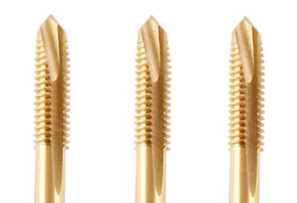
Its working principle is similar to electrostatic powder spraying. In a vacuum environment, solid target materials are broken into tiny atomic particles. These particles fly at high speed toward the tool surface and stack layer by layer to form a dense thin film. Most colored coatings on standard cutting tools are produced by the PVD process.
Technical Advantages
The biggest advantage of PVD is low-temperature processing. The coating temperature ranges from 200℃ to 500℃, which will not damage the substrate of cemented carbide tools. It avoids tool softening, deformation and cracking, and fully maintains the original hardness, toughness and precision of tools. The tool coating features strong adhesion and smooth surface, and never affects the sharpness of cutting edges. Its main limitation is directional coverage. Similar to flashlight illumination, PVD particles can only cover exposed surfaces evenly, failing to form uniform coatings on deep holes, narrow grooves and inner hidden structures of tools.
Application and Price Level
PVD is the preferred tool coating process for end mills, drills, turning inserts and precision molds. Common coatings including golden TiN, purple-black TiCN and black AlTiN all adopt the PVD process, which has become the standard configuration for general cutting tools.
PVD coating has a moderate and cost-effective price. It supports mass production with controllable costs, occupying the dominant position in the commercial tool coating market.

CVD Coating (Chemical Vapor Deposition)
Working Mechanism
Different from PVD, CVD forms coatings through chemical reactions. It can be simply understood as natural growth, just like ice condensation and plant growth. Multiple gaseous raw materials are delivered into a high-temperature furnace. Chemical combination and decomposition reactions occur on tool surfaces, growing solid and sturdy coating films directly on the tool substrate.
CVD adopts high-temperature coating treatment at 800℃ to 1100℃. High temperature accelerates chemical reactions greatly, achieving fast deposition speed and thick coating layers. Gaseous raw materials can fill the entire furnace space without dead angles, achieving uniform coating on all tool structures, including deep holes, special-shaped structures and narrow gaps.
High temperature also brings obvious drawbacks. It causes slight annealing of cemented carbide substrates and reduces tool toughness with tiny thermal stress. For this reason, CVD is not suitable for precision small-diameter tools with sharp edges. Besides, CVD coatings have rough surfaces with lower smoothness compared with PVD coatings.
Podanie
CVD is rarely used for precision end mills and micro drills. It is mainly applied to heavy-duty cemented carbide turning inserts. These tools have low requirements for edge sharpness and need thick coatings to resist severe wear, high temperature and strong impact. They are widely used in heavy cutting of steel and cast iron for longer service life.
Price Level
CVD coating belongs to the medium-high price range. It costs more than PVD due to high equipment investment and high energy consumption of high-temperature operation. However, its fast deposition speed adapts to large-scale thick coating production, stabilizing the overall mass production cost and targeting the high-end heavy-duty tool market.
ALD (Atomic Layer Deposition)

Working Mechanism
ALD is an upgraded and precise version of CVD, ranking as the most accurate tool coating technology at present. To make an intuitive comparison, PVD is equivalent to surface painting, CVD is equivalent to skin growth, and ALD is accurate atomic-level laying. It adopts pulse air supply mode. The first gas adsorbs on the tool surface to form a single saturated molecular layer, and redundant gas is extracted. Then the second reaction gas is injected to generate a single atomic film. Each cycle grows only one atomic layer, and the final film thickness is accurately controlled by repeated cycles.
Technical Advantages
ALD achieves extreme uniformity, density and fitting degree of coatings with no pinholes or blind spots. It can perfectly cover nano-scale micropores, ultra-narrow gaps and complex microstructures with 100% coverage. The low-temperature coating condition protects precision substrates well and realizes atomic-level accurate thickness control.
Application and Price Level
ALD is hardly used for conventional cutting tools. Its extremely slow deposition speed, sophisticated equipment and low single-batch capacity lead to ultra-high costs, making it the most expensive process among the three and unsuitable for mass production.
It is only applied to ultra-precision special tools, such as medical micro tools, nano-precision machining tools and anti-corrosion special tools, providing professional protection of moisture resistance, insulation and anti-adhesion. It is more widely used in the semiconductor industry rather than standard tool coating production.
Coating Selection Summary
The three tool coating technologies have distinct application scenarios, with performance and price fully matching actual machining working conditions. PVD coating is the best choice for precision end mills, drills, finishing inserts and stainless steel cutting tools. CVD coating is preferred for heavy-duty turning inserts and high-wear resistant cutting tools. ALD coating is only selected for high-precision special tools used in medical and microelectronic industries.